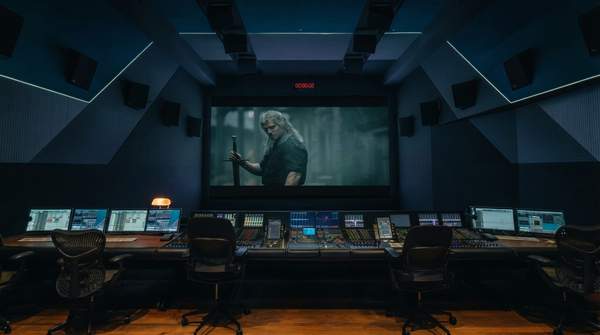
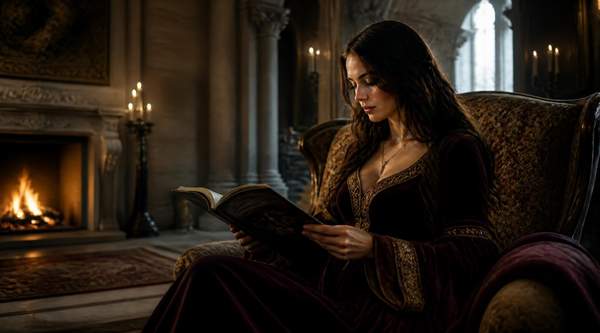
Audiences subconsciously assign collective context to separate images, making a single facial expression convey hunger, sorrow, or joy depending on the preceding shot. This phenomenon, the Kuleshov Effect, starkly illustrates how a facial expression's interpretation shifts based purely on its contextual arrangement. It challenges the intuitive belief that emotion resides solely within an actor's performance or a shot's intrinsic content, instead revealing the powerful, often invisible, influence of editorial sequencing on viewer perception, according to Movementsinfilm.
Juxtaposing simple images creates complex new ideas and emotions, yet audiences often perceive these emergent meanings as inherent to the scene, not constructed by the editor. This fundamental tension reveals a core truth of visual storytelling: deliberate manipulation of perception frequently occurs beneath conscious awareness, presenting editorially manufactured ideas as immutable.
Filmmakers can thus consciously craft audience emotional and intellectual responses through precise editing, making montage a powerful, often invisible, storytelling tool that continues to shape modern media. This systematic control over narrative meaning empowers storytellers who master juxtaposition.
Understanding Soviet Montage Theory
Soviet Montage Theory posits that juxtaposed sequences express new, complex ideas, according to Masterclass. This premise moves beyond documenting reality; it suggests the collision of independent shots creates a third, emergent meaning transcending individual elements. The cinematic effect is not merely the sum of its parts, but a synthesis born from their interaction, fundamentally altering how audiences interpret visual narratives.
This framework reshaped early 20th-century filmmaking, offering a structured approach to narrative construction. It enabled filmmakers to build sophisticated arguments and evoke precise emotional responses by orchestrating the relationship between disparate images. This empowers storytellers, providing a robust methodology to control narrative meaning and audience experience with unparalleled precision.
Eisenstein's Structured Montage Techniques
Sergei Eisenstein, a leading proponent, identified five distinct montage types: intellectual, metric, overtonal, rhythmic, and tonal, as detailed by Masterclass. These are not mere stylistic choices but systematic approaches to manipulating audience perception. Metric montage focuses on shot length, creating tempo regardless of content; rhythmic montage considers visual movement within the frame for a complex, flowing rhythm.
Tonal montage emphasizes emotional 'tone,' juxtaposing shots to evoke mood. Overtonal montage combines metric, rhythmic, and tonal elements for a richer, multi-layered impact. Intellectual montage conveys abstract ideas by juxtaposing thematically clashing shots, forcing the audience to synthesize new conceptual meaning. These categories illustrate nuanced ways filmmakers manipulate time, emotion, and intellect through editing, allowing precise control over emergent ideas and thematic effects.
Kuleshov's View: Film as a Visual Language
Lev Kuleshov advanced film's constructive power by applying literary and linguistic tools, forming sequences like sentences rather than composing scenes as theatrical productions, according to Movementsinfilm. Film editing is not merely assembling footage; it is a deliberate act of constructing meaning, much like forming coherent sentences. Kuleshov’s experiments revealed film's 'grammar' could dictate specific interpretations, making the editor akin to an author.
By treating individual shots as visual 'words' or 'phonemes,' filmmakers systematically dictate audience interpretation, creating a new language of meaning beyond simple depiction. This transforms the editing suite into a laboratory for narrative engineering, where precise image arrangement determines the viewer's psychological experience. This linguistic potential allows creators to master editing, ensuring their intended message resonates profoundly.
Contemporary Relevance of Montage Techniques
Soviet Montage Theory principles continue to influence contemporary filmmaking and visual media in 2026. Based on the Kuleshov Effect, any visual medium—from feature films to advertising and short-form digital content—subtly dictates emotional responses and constructs narratives without audiences consciously realizing the editor's hand. This unseen manipulation proves the enduring potency of carefully chosen juxtapositions.
Understanding montage reveals how narratives are built and emotions evoked, empowering creators and viewers to engage with visual media more critically. Filmmakers employ these techniques to accelerate pacing, build suspense, or convey complex character psychology without explicit dialogue. For audiences, awareness of montage theory sharpens critical faculties, allowing them to discern cinematic truth's constructed nature. This knowledge transforms passive consumption into active interpretation, fostering informed engagement.
By 2026, if major studios like A24 continue to innovate within these foundational principles, montage will likely remain critical for crafting resonant cinematic experiences, ensuring its subtle power endures across global visual platforms.