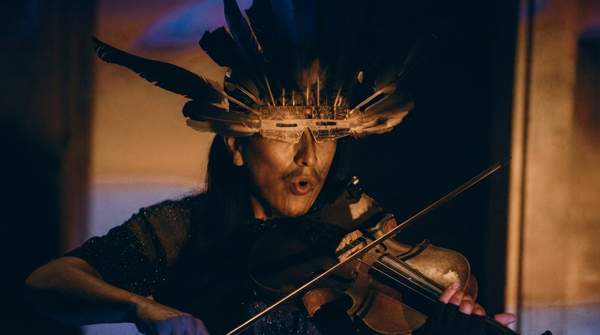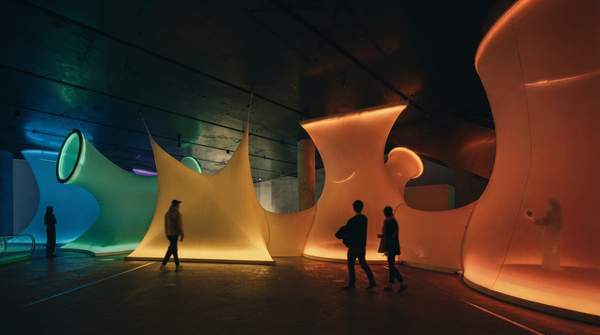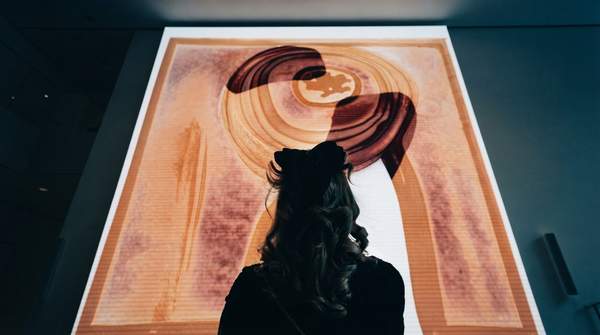
Contemporary artists are dismantling the white cube through three distinct strategies: building explorable architectural structures, transforming rooms with digital projections and sound, and placing interventions directly into public urban space. Rashid Johnson's Antoine's Organ, the Korean design company d'strict's reSOUND, and Art Basel's Parcours sector each represent one of these approaches, and each asks something different of the viewer—physical navigation, sensory surrender, or a re-reading of the city itself. Understanding which strategy an exhibition employs is the key to choosing the experience that matches your interests.
The Rise of Immersive Art: Beyond Traditional Galleries
"Immersive" has become one of the most elastic words in contemporary art marketing, and it helps to be precise about what it describes. Writing in The New Yorker in 2022, Anna Wiener traced the category's commercial ascent through the Japanese collective teamLab, which uses Epson projectors and opened its Borderless museum in Shanghai in 2019, and Pace gallery's satellite company Superblue, launched in 2020 to build what the industry calls "experiential art centers." teamLab's 2020 SuperNature space in Macau was billed as a "body immersive" environment—a telling phrase that locates the experience in the visitor's own body rather than in an object on a wall.
The distinction matters because not every engaging exhibition is immersive in this contemporary sense. A show of narrative paintings, however absorbing its imagery, still positions the viewer at a fixed distance from discrete works. Immersive art instead makes the room itself the medium, surrounding the visitor and often responding to their presence. As Elisa Carollo reported in Observer, d'strict's founder distinguishes the two layers: "digital art provides the tools and methods, while immersive art expands them into shared environments and emotional, sensorial contexts." The technology—projectors, sensors, sound—is the instrument; the immersion is the social and sensory situation it creates.