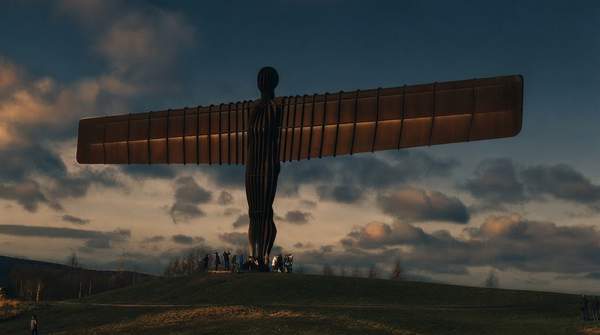
Public art rarely arrives by accident. Behind every mural, sculpture, or light installation in a city plaza sits a structured, multi-stage process that begins with funding and site identification, moves through artist selection and design approval, and ends with fabrication, installation, and long-term stewardship. A synthesis of municipal implementation guides—from Arlington County, Fort Worth, and Alexandria—alongside guidance from the College Art Association and Americans for the Arts reveals a consistent pattern: a public art commission is a negotiation among artists, city staff, arts commissions, and residents, with community input built into nearly every phase.
Understanding the Public Art Commissioning Lifecycle
Although every jurisdiction writes its own rules, the underlying architecture is remarkably similar. Arlington County's Public Art Master Plan Implementation Guide describes project planning as "a key step during which all aspects of a new public art project can be considered—community context, site context, functional requirements." Fort Worth's public art process formalizes this into numbered phases, each anchored by a standing advisory body. Alexandria's implementation plan adds its own structure, appointing a Public Art Project Task Force for each approved project to "advise on the entire project development process." The common thread is that no single actor—not the artist, not the city, not the commission—moves a project alone.
Stage 1: Project Initiation and Planning
Projects begin with funding and location. In Fort Worth's model, public art staff meet with city departments and their project consultants "to identify artwork location opportunities based on available funding sources." This is frequently tied to capital construction, a mechanism the National Civic League describes as the "percent-for-art funding mechanism, which links new artworks to the physical location of capital improvement projects." Because new works follow public construction budgets, the site is often determined before the artist ever enters the picture—a structural constraint that shapes everything downstream.
The planning stage also establishes the project's human infrastructure. Fort Worth staff work with the city's Community Engagement Office and the local council member to identify residents for a Project Core Team. In Alexandria, the Commission for the Arts appoints a Public Art Project Task Force, and staff and that task force together develop a "project plan" covering budget, schedule, and the artist selection process. Community engagement, Alexandria notes, "can occur at the artist selection and concept development phases, depending on the project."
Stage 2: Artist Selection Approaches
How the artist is chosen depends on the project. Arlington's guide lists the principal methods in use across the field: open competition, invitational competition, direct selection, and qualifications-based and proposal-based processes. An open competition invites any artist to submit materials, maximizing reach but demanding more review resources. An invitational competition narrows the field to artists the commissioning body approaches directly. Direct selection hands the choice to staff or a committee without a public call, while a qualifications-based process evaluates an artist's record and fit before committing to a specific design concept. Which method applies to a given project is itself a decision: Fort Worth's staff present a recommended artist selection process to the city's Art Commission for approval before the search begins.
The people at the table matter as much as the method. Fort Worth's Project Core Team participates directly in selection; in Alexandria, the Project Task Force "selects an artist, through a process set out in the Project Plan." Selection panels commonly blend arts professionals, city staff, and community representatives, so that technical judgment and neighborhood context are weighed together.
Stage 3: Design Development and Approval
Once selected, the artist develops a concept—and in Alexandria's process, that development "often engag[es] with the community as part of the creative process." Design review then proceeds iteratively. In Fort Worth, the Art Commission may approve the preliminary concept or "request that the artist revise their concept" based on a joint review with the Project Core Team. The final design phase sharpens the proposal into contract-ready specifics: the artist must "prepare and present complete information about the scale, location, materials, installation method, as well as a detailed budget to the Art Commission for joint review with the Project Core Team." Approval here is a gate, not a formality—it is where community concerns and technical feasibility are reconciled before fabrication money is committed.
The Critical Role of Community Engagement
Community involvement is not a courtesy appended at the end; it is a design feature of the process itself. Fort Worth's public art master plan update made the Project Core Team—a body "composed of community members and project stakeholders"—a standing recommendation for every project, providing "valuable input during the planning, artist selection, and design phases" while also communicating updates to neighbors and participating in the dedication. The National Civic League frames participation in civic terms: "greater public participation increases voter support for public art programs and investments," and public input during planning "helps ensure public art programs align with community priorities and values."
The College Art Association extends the principle beyond government, arguing that even private commissioning by museums, developers, and educational institutions—entities not bound by percent-for-art rules—should ideally be "transparent and provide opportunities for a diverse group of local community members and stakeholders to participate in decision-making," because residents "need to be involved in the commissioning as well as the artist's design process once selected."
Public Art Commissioning: A Step-by-Step Framework
The table below synthesizes the municipal guides into a generalized lifecycle model. One caveat: this is a synthesis across cities, not the exact procedure of any single jurisdiction, and it cannot detail every selection variation.
| Process Stage | Key Goal | Primary Decision-Makers | Community Input Method |
|---|---|---|---|
| Project Initiation & Planning | Identify site and funding; set scope, budget, and timeline; approve the artist selection process | Public art staff, city departments, Art Commission approval; Project Core Team or Project Task Force formed | Residents identified (with city engagement offices and council members) and invited to serve on the Core Team or Task Force |
| Artist Selection | Choose an artist whose qualifications and vision fit the project's goals and context | Project Core Team or Project Task Force, with final approval by the Art Commission | Community members serve on the selection panel or team that reviews applications |
| Design Development & Approval | Refine concept into a complete design with scale, materials, and budget | Artist with city design staff; Art Commission reviews and may request revisions | Joint reviews with Core Team/Task Force; artist may engage community during concept development |
| Fabrication & Installation | Build and install the approved design per the final design documents | Artist, fabricators, city project staff | Core Team communicates project updates to neighbors |
| Dedication & Stewardship | Celebrate the work and sustain its care over time | Public art program staff with commission oversight | Community participates in dedication events and ongoing stewardship of the artwork |
Stage 4: Fabrication, Installation, and Maintenance
The final design's detailed budget and installation method become the working blueprint for fabrication. Yet the process does not conclude when the artwork is bolted down. Fort Worth's Project Core Team model extends participation to "the artwork dedication event and ongoing stewardship of the artwork"—an acknowledgment that a public artwork's life in the urban landscape is measured in decades, and that the community that helped choose it remains part of its care. The College Art Association's guidance underscores the stakes: public art "can have considerable impact on neighborhoods and communities," which is precisely why involvement is designed to persist past installation day.
Navigating Public Art Commissions: Key Takeaways
Successfully engaging with public art commissions requires understanding the structured, multi-stakeholder process and actively participating in community input opportunities. For residents, the practical entry points are concrete: Core Teams and Task Forces are seeded during project initiation, and selection and design reviews recur at predictable gates. For artists, the pathway depends on which selection method a program uses—an open call, an invitation, direct selection, or a qualifications review—and the Call for Artists Resource Guide developed by Americans for the Arts' Public Art Network exists to help programs describe opportunities clearly enough for artists to respond. For planners and officials, the evidence from these municipal guides converges on one point: early, sustained participation is the mechanism that turns a sited object into a public work.
A public art project's success can be observed through its integration into the urban landscape and positive community reception, often indicated by sustained public engagement and minimal controversy during its lifecycle. That outcome is not luck; it is the designed consequence of the staged, participatory process these municipal guides describe—and the measurable test of whether a commission did its work well.