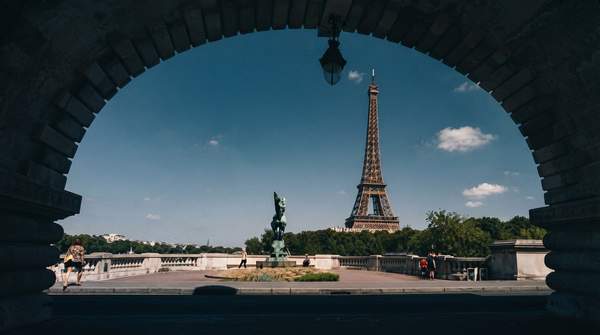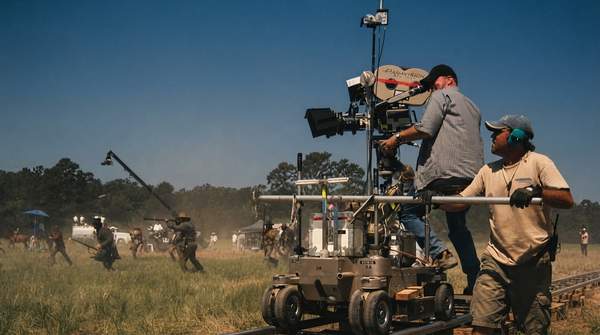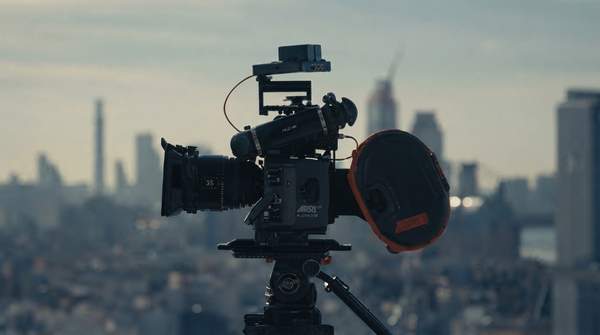
An aspect ratio—the ratio of an image's width to its height—is one of the most quietly powerful tools in a director's kit. Expressed as two numbers separated by a colon (width:height), it determines the shape of every frame a viewer sees. Filmmakers choose it deliberately to control composition, evoke a historical period, and shape emotional response, and few films demonstrate this more vividly than Wes Anderson's The Grand Budapest Hotel, which shifts among three different ratios to mark three different eras.
Understanding Film Aspect Ratios: A Filmmaker's Canvas
The common cinematic ratios form a compact vocabulary. In cinematography, 1.85:1 and 2.39:1 are standard widescreen formats; television began with the boxier 4:3 and settled later on 16:9. Anderson's film leans on exactly this shared visual memory. Because audiences—often without knowing why—associate certain frame shapes with certain eras of moviegoing, the ratio itself can carry meaning before a single line of dialogue is spoken.
Adobe's filmmaking resources frame aspect ratio as a storytelling decision rather than a technical afterthought, asking directly whether a project is character-driven or whether the environment itself functions as a character. A director's viewfinder guide from the Cadrage team makes the same point from the practitioner's side: the ratio should be considered alongside the script, because it works hand in hand with shot composition to heighten a scene's atmosphere.
Timeline of Major Cinematic Aspect Ratios
The history of the frame explains why each ratio carries the associations it does. The table below sequences the major formats chronologically, linking each to the context of its adoption or use.
| Era / Decade | Aspect Ratio | Common Name | Key Characteristic / Use |
|---|---|---|---|
| Early sound era; the 1930s | 1.37:1 | Academy Ratio | The near-square standard of Hollywood's early decades; Anderson chose it for his film's 1930s sections to match the period's cinematic look. |
| Early television era | 1.33:1 (4:3) | Full screen / "boxy" TV | The television frame that widescreen formats reacted against; cropped films frustrated directors, prompting Sydney Pollack to sue Danish TV over a compromised broadcast of Three Days of the Condor. |
| 1953–1955 | 1.75:1 | Early widescreen (7:4) | A 35 mm widescreen ratio used by Metro-Goldwyn-Mayer and Warner Bros. for a brief transitional window, later abandoned. |
| Mid-20th century onward | 1.85:1 and 2.39:1 | Standard and anamorphic widescreen | The common theatrical standards; wider frames became the cinema's answer to television, and 2.39:1 in particular suits sweeping genres. |
| 1990s onward | 1.78:1 (16:9) | HDTV widescreen | Developed in the 1990s as high-definition television's middle ground between boxy 1.33 and extra-wide 2.59; now the standard for YouTube, Vimeo, and online video. |
Read from top to bottom, the timeline shows a widening of the frame driven largely by competition: cinema stretched itself apart from the living-room screen, and television eventually stretched back. Adobe's account of the HDTV compromise explains the 16:9 compromise ratio—and why it, in pixels 1920:1080, became the default canvas of the internet era.
The Grand Budapest Hotel: A Masterclass in Shifting Perspectives
Anderson's 2014 film uses the timeline above as a narrative device. As Adobe's filmmaking guide recounts, he used the Academy Ratio for most of the film, since it takes place in the 1930s, then switched to a 2.35 ratio for action set in the 1960s, and switched again to a 1.85 ratio for the "present-day" action of the 1980s.
Each shift does double duty. It marks the passage of time instantly—no title card required—because the viewer subconsciously registers the frame's changing shape as a change of era. And it borrows the aesthetic character of each period's dominant format: the near-square intimacy of the 1930s frame, the mid-century sweep of 2.35 widescreen, and the more grounded 1.85 standard for the film's later, more melancholy passages. The technique turns film history itself into a storytelling instrument, letting the audience feel the distance between the hotel's glamorous past and its diminished present.
Composition and Emotion: How Aspect Ratios Shape the Viewer's Experience
Beyond period signaling, ratio shapes what a frame can contain and how it feels. The Cadrage team's guidance on story and genre illustrates the contrast: a wider ratio such as 2.39:1 can add a "larger than life" feeling to images, which is why it is popular for science fiction and action films, while for more "down to earth" genres like drama, a tighter format like 1.85:1 can be favored because it gives images a more realistic touch.
These are general tendencies, not laws—individual films may deliberately subvert them—but they explain the emotional physics of the frame. A wide rectangle invites landscapes, choreography across space, and a sense of epic scale; a taller, narrower frame crowds the edges closer to faces, pushing attention inward toward performance and psychology. The ratio thus quietly answers a compositional question before any shot is lit: where can meaning live within this rectangle?
Choosing Your Frame: Practical Considerations for Filmmakers
For a filmmaker selecting a ratio, the practical starting point is the material itself. What images come to mind when you think of the script? Is the setting one of the characters? Adobe quotes creative voices on the modern variants of this question—craft director Kavanaugh notes that "projects where the environment is a character don't play as strong in vertical as they do in horizontal," while creative director Toby Harriman argues that content seen mainly on Instagram should be designed for that real estate.
For narrative projects, the historical and genre associations charted above become creative constraints to exploit rather than ignore. A period story can borrow its era's native frame the way Anderson did; an epic can reach for 2.39:1's breadth; an intimate drama can stay grounded at 1.85:1. And for work intended for online distribution, 16:9 remains the default that platforms and viewers expect.
Applying Aspect Ratio Knowledge to Your Filmmaking and Viewing
Filmmakers should intentionally select aspect ratios to align with their narrative goals, historical setting, and desired emotional impact, while cinephiles can deepen their viewing by recognizing these deliberate choices. The clearest indicator of this mastery is measurable: the consistent and purposeful use of aspect ratios in a film—particularly when shifting between them, as in The Grand Budapest Hotel's moves from 1.37:1 to 2.35:1 to 1.85:1—signals a director treating the frame itself as part of the story. Watch for that shift the next time a film changes shape, and you'll see where the craft lives.
Sources
- The importance of aspect ratio in modern filmmaking — ADOBE
- The Importance of Aspect Ratio in Filmmaking | Cadrage — Cadrage | Director's Viewfinder App for iPhone & iPad
- Aspect ratio (image) - Wikipedia — EN