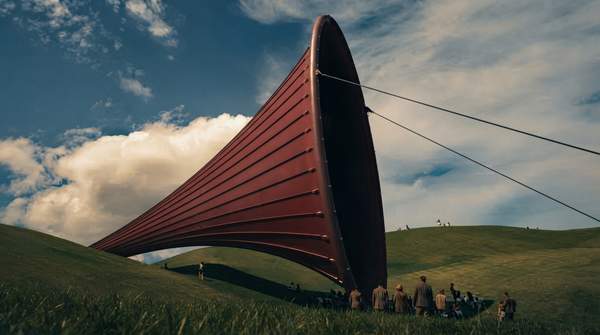
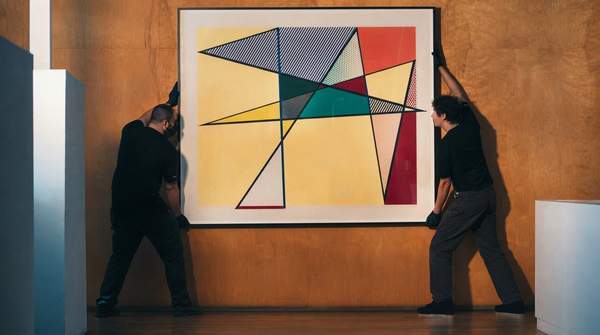
Site-specific art installations are fundamentally defined by their intrinsic connection to a particular location, with their meaning and form derived from and dependent on the specific architectural, historical, or natural environment. Unlike many other forms of public art, a site-specific artwork is conceived in direct dialogue with its surroundings, and its essential meaning is diminished or entirely lost if it is removed from its intended place. This profound relationship with location shapes both the conceptual drivers and the practical considerations for artists and curators. Introduction: Defining Site-Specific Art
At its core, site-specific art involves creating environments that tell stories, evoke feelings, and provoke thought, often occupying entire rooms or outdoor spaces. These installations allow artists to manipulate the environment to achieve their vision, incorporating elements such as light, sound, and various materials to craft complex sensory experiences, as described by Scott Fleary. Serenade Magazine further notes that many installations are site-specific, meaning they are designed for a particular location and may lose part of their meaning if moved elsewhere. This approach enables artists to create works that engage directly with their environment.
Art21 emphasizes that site-specific works are created in dialogue with their surroundings, making the location of their installation an integral part of the work itself. If a site-specific artwork is removed from its intended place, it loses some, or even all, of its meaning. Artist Richard Serra famously articulated this principle regarding his 1981 installation *Tilted Arc*, stating, "To remove the work is to destroy the work." This highlights how artists use the chosen place as a starting point, informing their creations through the environment in which viewers encounter them.Conceptual Engagement: The Environment as Muse
The environment plays a significantly more profound role in site-specific art than in other artistic endeavors, with artists' choices reflecting their observations, responses to, and interactions with the surroundings, according to RMCAD. Artists are often deeply interested in the relationship between art and its surroundings, considering the architectural qualities of a site, including its history, scale, materials, and social context, as noted by Margot Lenz writing for Serenade Magazine.
Site-specific installations can aim to manipulate, accentuate, or transform the feeling or experience of a place. The urban or natural landscape thus plays a crucial role in shaping the artist's vision. For instance, large-scale installations might recreate environments linked to specific events or communities, offering viewers a direct and emotional experience of ideas. Sound, architecture, objects, and moving images can converge to construct powerful narratives that encourage reflection and discussion, particularly as contemporary art increasingly addresses global issues. Scott Fleary explains that immersive environments within these installations can evoke strong emotional responses, provoke thought, or simply provide a space for contemplation, akin to stepping into the artist's mind to gain a profound understanding of the work's conceptual underpinnings.Practical Considerations in Site-Specific Installations
Creating site-specific art involves a complex array of practical considerations and challenges. Artists must meticulously plan and often collaborate across disciplines, including architecture, engineering, and technology, to navigate technical challenges and ensure the conceptual integrity of the work while adhering to practical and structural requirements, Scott Fleary explains. The execution phase demands careful attention to material selection and craftsmanship.
One critical aspect is scale, where artists must consider the space in which the installation will exist and the appropriate size needed to make an adequate impact. RMCAD highlights the importance of ensuring the installation and its surroundings feel well-balanced, becoming intertwined in a natural way. This means assessing whether a small installation would be overwhelmed by a large space or if a large one would inadvertently crowd a smaller location.
Material selection is also paramount, not only for aesthetic reasons but also for durability, safety, and environmental impact. For outdoor installations, artists must consider how materials will withstand various weather conditions and how they might affect the local ecosystem. RMCAD points out potential environmental concerns, such as mirrors posing a danger to birds, noise-making features frightening animals, or installations on game trails impeding natural movements. Artists can also leverage their public art projects to raise awareness about sustainability by showcasing eco-conscious designs and sustainable processes in their works. Furthermore, securing permissions for installations, especially in public or natural spaces, adds another layer of logistical complexity.
Distinguishing Site-Specific Art from Public Art
While all site-specific art can be considered public art if it is accessible to the public, the defining characteristic that differentiates site-specific art is its inherent, non-transferable relationship with its location. Public art is a broader category that encompasses any art displayed in public spaces, which may or may not be intrinsically tied to its environment.
As Serenade Magazine and Art21 both underscore, site-specific installations are designed for a particular location and would lose part, or all, of their meaning if moved elsewhere. This is the crucial distinction. An artwork that is merely *placed* in a public space, even if large or interactive, is not necessarily site-specific if its core meaning and aesthetic experience could be replicated or understood in a different setting. For example, a sculpture placed in a park might be public art, but if its form, materials, or narrative are not directly informed by the park's history, ecology, or community, it is not site-specific.
Conversely, a site-specific artwork, whether a sculpture, mural, or interactive installation, is conceived in direct response to its surroundings. Its form, materials, and conceptual underpinnings are inextricably linked to the unique characteristics of that specific place. RMCAD notes that with site-specific art, the environment plays a much more significant role, as the artist's choices reflect observations, responses to, and interactions with the environment. This intrinsic connection means that the artwork and the site become a singular entity, where one cannot be fully understood or appreciated without the other.