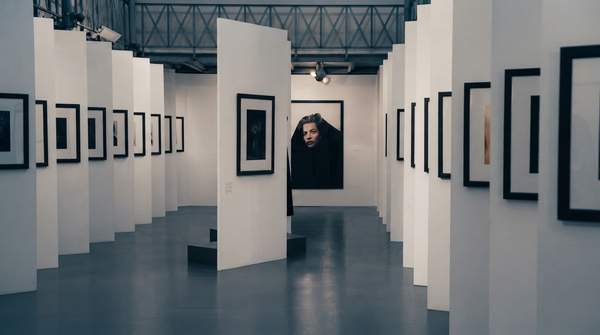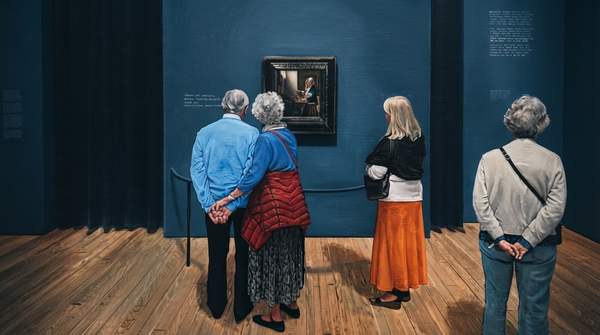
Permanent collections and temporary exhibitions differ in three fundamental ways: how long the works stay on view, who owns them, and what the museum is trying to achieve by showing them. A permanent collection displays the institution's own holdings for years at a time, functioning as the core of its identity and its account of art history. A temporary exhibition is a time-limited event, often built around loaned works, new commissions or material pulled from storage, designed to draw visitors back, spotlight a theme, or open a conversation the permanent galleries cannot. Once you learn to read these signals, a museum visit stops being a passive stroll and becomes an exercise in interpretation.
Understanding Museum Exhibitions: Permanent vs. Temporary
Writing for Art&theCities, an art-travel publication, identifies the main differences between the two formats as the duration of the exhibition, the ownership of the exhibited works, the theme of the itinerary that guides the visitor, and the setting itself, noting that temporary shows tend toward more immersive installation than their permanent counterparts. These distinctions are practical, not merely administrative. They shape what you will see, how long you can see it, and what intellectual work the museum expects you to do in front of each object. A permanent display answers the question of what this institution believes art history is; a temporary show answers the question of what this institution finds worth examining right now.
The Enduring Core: Permanent Collections and Their Evolving Narratives
The assumption that permanent means static has eroded badly, and the evidence comes from curators themselves. An essay in Stedelijk Studies on collection displays in Italian contemporary art museums observes that in recent years the concept of the collection has been pursued further, asking how the display mode itself could contribute to the identity of the museum. The same essay, discussing the MAXXI collection in Rome, describes the goal as activating a living process in which the memories of history are continuously reconstructed in order to provide new vitality that keeps the work alive.
The historian Mary Anne Staniszewski, in an interview, offered a concrete example: after roughly 2010, the Museum of Modern Art began including art created by women in its programming with more consistency, and she described the temporary exhibition drawn from its collections as revelatory. Even a permanent gallery, then, is an argument that gets revised.