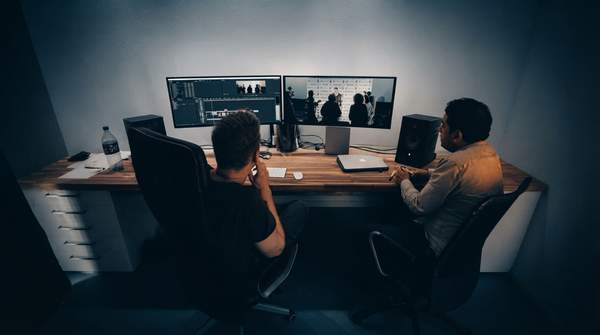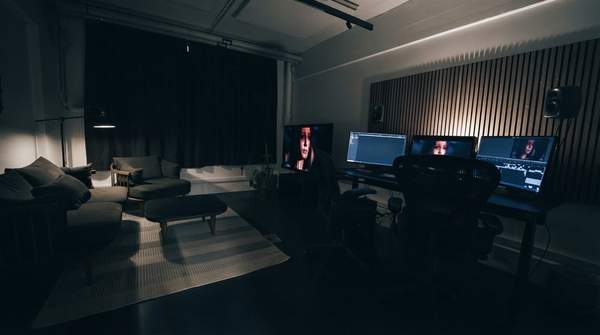
Every documentary is edited twice: once in the shoot, and again in the cutting room, where the raw record becomes a narrative. That second pass is where most of the genre's ethical weight settles. The editor decides which of a hundred honest moments becomes the moment, in what order events unfold, and which version of a person an audience meets. This article distills what filmmaker surveys, industry commentary, and research on filmmaker–participant relationships tell us into a practical framework: a set of questions an editor can ask before committing a cut that a subject will have to live with.
The Editor's Ethical Compass: Shaping Truth and Narrative
Editing is not a neutral act of assembly. As David Winter observes in writing on video editing ethics, a documentary should "inform and engage, not deceive or manipulate," and the cutting room is where that line is most easily crossed without anyone noticing. The Center for Media and Social Impact's Honest Truths report—based on a survey of documentary filmmakers about ethical challenges in their work—names "framing and editing," along with staging, restaging, effects, and the use of archival materials, among the field's recurring areas of concern.
What makes editing distinct from other ethical pressure points is its invisibility. An audience may forgive a shaky camera or a restaged scene flagged on screen; it rarely detects a reordered conversation. Winston, the scholar cited in one examination of documentary ethics, uses journalism as a comparison vehicle precisely because both forms claim to represent reality and hold to truth-telling—a claim that obligates care in how the record is recombined. The editor's compass must therefore point toward fidelity to events while acknowledging that selection, compression, and emphasis are the job itself.
Core Ethical Principles in Documentary Editing
Underpinning any editing decision are two responsibilities that pull in different directions. The first is owed to subjects. The International Documentary Association has published extended reflection on this relationship—most influentially in Cal Pryluck's essay "Whose Life Is It Anyway?", which argues that ethics in documentary concerns the choices among acceptable alternatives among filmmakers, participants, and collaborators, rather than a simple list of prohibitions.
The second responsibility is owed to viewers. The Honest Truths findings organize this under the heading of honoring trust: audiences come to non-fiction expecting that what they see corresponds, in some defensible way, to what occurred. An edit can betray that expectation long before any factual statement is falsified.
A third principle compounds both: power asymmetry. As the IDA's later discussion of documentary distortion notes, a filmmaker's ethical obligation rises in proportion to a subject's lack of alternative means of representation—those who depend on the film to have their story told, particularly people occupying lower social strata who can most readily be cast as victims, are the most vulnerable to misrepresentation in the cut.
Ethical Decision Framework for Documentary Editors
The framework below categorizes the editing techniques the Honest Truths survey identifies as ethically charged against the core principles above, generating diagnostic questions and tracing the likely impact on subjects and viewers. It is a guide for consideration, not a rulebook; the right answer will differ from film to film.
| Editing Technique | Ethical Principle | Questions for the Editor | Potential Impact on Subject/Viewer |
|---|---|---|---|
| Framing and editing | Fair, balanced portrayal; do not mislead about events or views | Does this edit accurately reflect the subject's views or the sequence of events, or could it mislead? | Misrepresentation of subjects; erosion of viewer trust; distorted reality—greatest risk for vulnerable subjects |
| Staging, restaging, and effects | Fidelity to events; transparency when reality is altered | Would the audience understand what was constructed rather than captured? Is that understanding available on screen? | Blurred line between record and construction; broken truth-claim on which documentary rests |
| Use of archival materials | Contextual accuracy; avoid misattribution | Does this footage appear in a context consistent with its original one? Is the source and moment clear? | A misleading narrative built from truthful fragments; viewers import false context onto real events |
| Filmmaker–subject power dynamics | Elevated obligation to those dependent on the film for representation | If this subject had other means to represent themselves, would my obligation to them change? Have I considered what they risk by appearing? | Exploitation and abuse of trust; subjects unable to correct the record once the cut is locked |
The table's purpose is systematic: before locking a sequence, an editor can locate the technique in question in the first column, check it against the governing principle, and answer the diagnostic question honestly. The fourth column describes the stakes.
Applying the Framework: Common Editing Scenarios
Consider how the framework behaves in practice. A conversational interview yields forty minutes of halting, thoughtful remarks; the cut needs ninety seconds. Compressing scattered sentences into a fluent answer is standard craft—but Winter's caution about editing that misleads "about the events or the views of the subjects" applies directly. If the compression changes what the subject concluded, the diagnostic question fails, no matter how elegant the rhythm.
Reordering events is subtler. The Honest Truths survey treats framing and editing as one of the primary places where representation is decided, and Winston's journalism comparison reminds us why chronology carries a truth-claim: audiences assume temporal sequence reflects actual sequence. An editor who moves a subject's angry remark ahead of the provocation that caused it has staged an emotional causation that never occurred.
Archival material raises the same stakes with less visible seams. Footage of a protest, a war, or a private moment carries its original context invisibly; placing it against a new voiceover can create a persuasive falsehood out of authentic fragments. The framework's archival row asks the editor to verify that the new context does not misattribute meaning.
Power dynamics run through all of these scenarios. The IDA's analysis is blunt: subjects dependent on the filmmaker to have their story told are most vulnerable, and many filmmakers have recognized this by lending material assistance when failing to do so could have had dire consequences. In the edit, that recognition translates into a habit of imagining the subject watching the finished film.
Upholding Trust: The Editor's Ongoing Responsibility
The field itself is still working toward shared standards. The Honest Truths report concludes that any credible code of ethics must develop from a shared understanding of values and practices—and that a more extended conversation is still needed to cultivate it. Recent research echoes this: a NORC project conducted for the Independent Television Service between September 2023 and May 2024 examined how filmmaker–participant relationships evolve and found that their ethical complexities often go unexamined, leaving questions of representation, agency, and power unresolved.
For the editor, the practical decision is this: integrate ethical reflection as a continuous part of the workflow, using the framework above to guide choices that balance artistic vision with responsibility to subjects and audience. The measure of success is not a completed checklist but the consistent application of these principles, evidenced by a film's transparent and fair representation of reality and its subjects. An edit that survives the diagnostic questions—accurate to events, honest about construction, careful with borrowed footage, and mindful of who cannot answer back—will still be an argument. It will simply be one that neither its subjects nor its viewers have cause to distrust.
Sources
- Honest Truths: Documentary Filmmakers on Ethical Challenges in Their Work - Center for Media and Social Impact
- Exploring Ethical Documentary Filmmaking & Filmmaker-Participant Relationships — NORC
- Ethics in Video Editing: The Do's and Don'ts of Manipulating Reality — LWKS
- Mospace
- Whose Life Is It Anyway? Ethical Responsibility in Documentary Filmmaking — International Documentary Association
- What to Do About Documentary Distortion? Toward a Code of Ethics — International Documentary Association