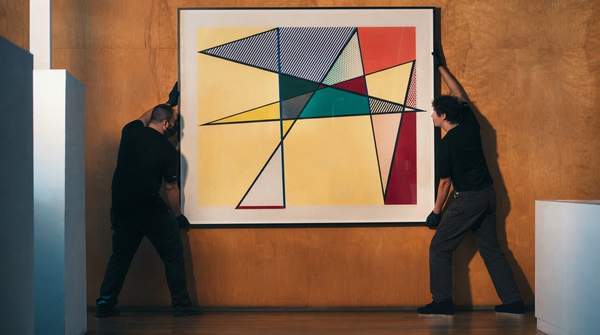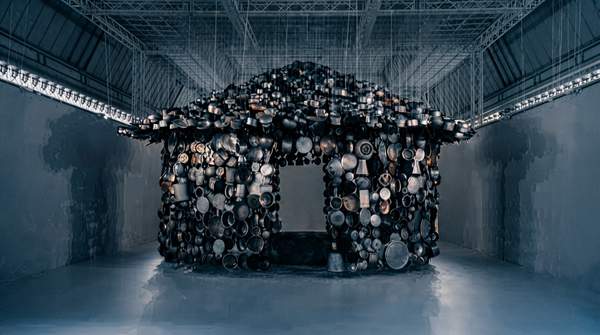
Contemporary found object art succeeds or fails on a single question: does the material already mean something before the artist touches it? The three practices compared here answer differently. Guerra de la Paz builds colorful sculptures from recycled clothing to deliver what Artsper Magazine describes as deeply political messages; Subodh Gupta folds everyday objects significant in Indian culture into installations that register a society changing under globalization; and Tony Cragg, in his early career, scavenged, stacked and piled plastic, machine parts and industrial waste into new forms, most memorably transforming sewage pipes into a monstrous snake in his 1985 Kahzernarbeit. In each case, the material is not a neutral support for the theme—it is the theme's raw substance.
The Enduring Legacy of Found Object Art
What separates found object sculpture from ordinary modeling or carving is that the artist begins with something that has already lived another life. The Tate defines the category precisely: a found object is "a natural or man-made object, or fragment of an object, that is found (or sometimes bought) by an artist and kept because of some intrinsic interest the artist sees in it." Such objects may be shelved and treated as works of art in themselves, or serve as sources and ingredients for new work—the sculptor Henry Moore, the Tate notes, collected bones and flints that functioned for him as both natural sculptures and inspiration.
This dual status—object and artwork at once—is what makes the tradition so productive for contemporary artists. As a survey of assemblage practice by Charles Leo for Mostarle observes, key characteristics of the field include minimal modification of the objects, the rich social history the items carry from their previous use, and the use of democratic, accessible materials. That social history is precisely what the three artists below exploit: clothing carries bodies and labor, kitchenware carries domestic ritual, and industrial debris carries the machinery of modern production.