Watch a classic film on a modern 4K release and you may notice something strange: the image looks cleaner, sharper, more pristine than ever—and somehow less alive. The culprit is often the removal of film grain, the shimmering texture that photographers and cinematographers have treated not as a defect but as a creative instrument. Digital restoration tools, especially the neural-network systems now dominating the field, can scrub that texture away, trading a film's organic, breathing quality for a sterile clarity its makers never intended.
What Film Grain Actually Is
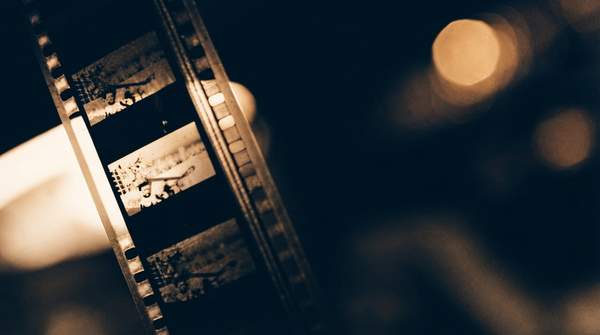
Film grain is not digital noise. It is the physical residue of the photographic process itself: when light strikes a strip of celluloid, it exposes microscopic crystals of silver halide suspended in the emulsion. Those irregular crystals, developed into visible speckle, are what we perceive as grain. Because each crystal forms randomly, the pattern they create shifts subtly from frame to frame—giving projected film its faint, living pulse.
Filmmakers learned to exploit this. Grainier film stocks render a scene as raw, urgent, documentary-real; finer stocks feel polished and dreamlike. Cinematographers could push-process stock—overdeveloping it to heighten sensitivity—knowing the penalty would be heavier grain, and choosing it deliberately for grit and texture. Grain signals the material world. It is the fingerprint of the medium, and its density is an aesthetic decision made on set and in the lab, not an accident to be corrected.
Comparing Digital Film Restoration Approaches
The central tension in modern restoration lies between two philosophies of tooling. Restoration-software developer PFClean, in a technical explainer by Adam Hawkes, contrasts traditional manually controlled workflows with neural-network systems trained on large datasets, and the differences in how each treats grain are consequential. The comparison below isolates the trade-offs.
| Characteristic | Traditional / Manual Restoration | AI / Neural Network Restoration |
|---|---|---|
| Control & Precision | "Surgical precision" through manual, highly customizable controls; restoration artists can selectively target specific densities or areas of the image. | Mostly automated, operating as a "black box"; users get broad slider controls (such as denoise or texture amount) but lack localized precision. |
| Visual Authenticity | Prioritizes preserving the organic, photochemical nature of the original film stock; matches exact grain signatures. | Tends to aggressively smooth images; can strip away natural texture, producing a sterile or "plastic" look. |
| Temporal Consistency | Documented as excellent. | Not characterized in the source. |
Read the table one row at a time and the practical stakes emerge. A human restorer working manually can decide that a scratch on frame 40,000 deserves repair while the grain around it stays untouched; the grain signature—the specific size, density, and character of that film stock's texture—is treated as data to be matched, not dirt to be removed. An automated system cannot make that distinction locally. It applies its smoothing globally, guided by statistical patterns learned from training data rather than by an artist's eye on this particular film.
That is why the two approaches diverge most sharply on the authenticity row. The manual philosophy treats the photochemical origin of the image as the thing being preserved. The neural-network approach, optimized for a clean output, "tends to aggressively smooth images," in PFClean's characterization—and aggressive smoothing does not distinguish between unwanted noise and the grain that carries the film's mood.