Film noir's signature atmosphere of mystery, paranoia, and moral ambiguity was not primarily a product of plot or dialogue—it was engineered in the lighting rig and the camera mount. The classic noir cycle, flourishing mainly from the early 1940s to the late 1950s, is fundamentally a low-key, high-contrast visual style that intentionally rejects the bright, even illumination of genres like musicals and comedies, according to the Filmmakers Academy's analysis of noir lighting. Darkness dominates the frame; light is used sparingly and dramatically. The result is a cinematic world that conceals as much as it reveals, where every shadow is a narrative participant rather than a technical accident.
Introduction: The Dark Allure of Film Noir
What makes a film feel noir is rarely its story alone. The genre's enduring visual identity rests on a recognizable toolkit: stark chiaroscuro lighting, faces swallowed by darkness, shadows striped across walls by Venetian blinds, and cameras tilted so the horizon itself seems unstable. These choices were not decorative. Noir lighting, as the Filmmakers Academy puts it, seeks to evoke mystery, dread, paranoia, fatalism, and moral ambiguity—and it achieves this precisely by concealing as much as it reveals.
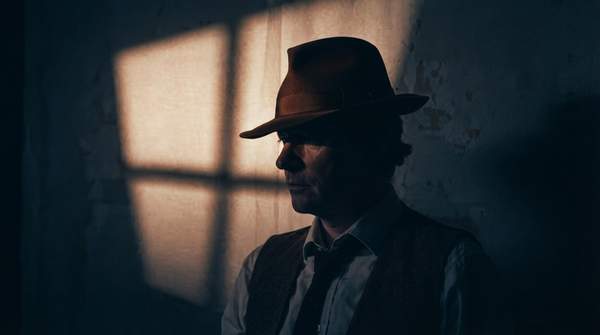
The style's most iconic images had become clichés well before the neo-noir era, as the collaborative film reference record of the genre notes: the shadows of Venetian blinds or banister rods cast upon an actor, a wall, or an entire set. That a technique could become a cliché is itself evidence of how thoroughly it defined the genre. For film students, the lesson is that noir's mood is reproducible because it is systematic—a grammar of light and angle that can be identified, named, and interpreted scene by scene.
Historical Roots and Influences
The noir aesthetic emerged from a specific historical moment. As the Filmmakers Academy observes, the style took hold especially as America grappled with the anxieties of World War II and its aftermath. A society processing war, returning soldiers, and post-war uncertainty proved receptive to stories—and images—steeped in doom, fate, fear, and betrayal. The genre's visual darkness gave form to that collective mood.
Technically, the style also had practical roots in working Hollywood cinematography. The low-key lighting schemes of many classic noirs are associated with stark light/dark contrasts and dramatic shadow patterning—a style known as chiaroscuro, a term adopted from Renaissance painting, as the genre's reference record explains. This meant noir's look was built from existing, learnable craft practices rather than invented wholesale: strong key lights, minimal or absent fill light, and deliberate shadow placement. The constraint of shooting in black-and-white, considered by many an essential attribute of classic noir, made contrast the primary expressive instrument available to the cinematographer. Notably, the boundary was never absolute—the color films Leave Her to Heaven (1945) and Niagara (1953) are routinely included in noir filmographies, and Slightly Scarlet (1956), Party Girl (1958), and Vertigo (1958) are classified as noir by varying numbers of critics.
The Visual Grammar of Film Noir
The table below deconstructs the noir visual style into its constituent techniques and maps each to its atmospheric and narrative function, drawing on critical analysis of the genre. Read it as a decoder: the left column names what you see on screen, the middle column explains how the cinematographer produced it, and the right column explains why.
| Technique | Technical Execution | Psychological / Thematic Effect |
|---|---|---|
| Low-key lighting (chiaroscuro) | Scenes are intentionally underlit with a strong key light while fill light is kept extremely low or eliminated entirely, producing a high key-to-fill ratio and deep, dark shadows. | Creates drama, tension, mystery, and moral ambiguity; darkness dominates the frame and shadows become active participants in the storytelling. |
| Shadow patterning (e.g., Venetian blinds) | A light source is positioned to cast distinct patterns—blinds, banister rods—onto actors, walls, or entire sets, often layered over low-key lighting. | Fragmenting the frame suggests entrapment and psychological unease; the visual fracture mirrors fractured psyches and hidden motives. |
| Obscured faces and figures | Deep shadows are allowed to partially or wholly swallow characters' faces—a relative rarity in conventional Hollywood filmmaking. | Hides potential threats and forces the audience to peer into darkness; visual uncertainty complements narrative uncertainty and unreliable narrators. |
| Dutch (canted) angles | The camera tilts the frame so the horizon line is skewed. | Produces emotional imbalance, unease, and disorientation—a world visibly out of balance. |
| Low-angle shots | The subject is shot from below. | Portrays a subject as powerful or dominant, heightening the sense of threat and power imbalance central to noir's fatalistic worldview. |
Two clarifications keep this framework honest. First, the Dutch angle and low-angle shot are general cinematography techniques, as Adobe's cinematography guide defines them—not noir inventions—but noir deployed them with unusual insistence, and the genre's reference record lists low-angle, wide-angle, and skewed Dutch angle shots among its known signatures. Second, the table describes general application within the genre rather than scene-by-scene analysis of particular films.
Low-Key Lighting and Chiaroscuro: Crafting Darkness
The bedrock technique, in the Filmmakers Academy's account, is low-key dominance: scenes are intentionally underlit, with shadows commanding the frame. The key light—the main source illuminating the subject—is strong, while the fill light, normally used to soften shadows, is kept extremely low or often eliminated entirely. The resulting high key-to-fill ratio produces the deep, dark shadows that define the noir aesthetic.
Chiaroscuro, the term borrowed from Renaissance painting, names the stark light/dark contrast this setup creates. Its thematic power lies in what the contrast does to certainty. When a face is half-lit, the audience cannot fully read it; when a room is mostly black, anything might be waiting in it. The genre's reference record notes that characters' faces may be partially or wholly obscured by darkness, and that this was a relative rarity in conventional Hollywood filmmaking—precisely why it registered so strongly. Visual uncertainty on screen complements the narrative uncertainty of hidden motives and elusive truth.
A practical tradition of purposeful darkness runs through the style's history: from Caravaggio's black backgrounds to John Alton's searchlight in the fog and Seitz's Venetian blinds, the best dark images share one quality, as one studio's craft commentary puts it—every shadow was put there on purpose.
Shadows and Angles: Fragmenting Reality
Shadow patterning is where noir's lighting becomes graphic design. The Venetian-blind shadow—stripes cast across an actor or wall—is the genre's single most iconic visual, so widely imitated that it was already a cliché before the neo-noir era. Its effect is fragmentation: the pattern slices the frame and the body into segments, visually echoing entrapment and a fractured psyche. The craft advice from the studio commentary is blunt about the method—start with a single hard key, count your stops, and let the rest of the frame go dark, because "you'll be surprised how much story the darkness tells."
Camera angles perform the same destabilizing work in spatial terms. The Dutch angle tilts the frame to create emotional imbalance, unease, or disorientation, per Adobe's definition of the technique; in noir's fatalistic stories, a tilted world is the honest one. Low-angle shots, shooting a subject from below, portray that subject as powerful or dominant—an apt grammar for a genre populated by menacing crime bosses, corrupt officials, and femme fatales who control the frame as they control the plot. Combined with obscured faces, these angles mean the viewer is always working: peering into black, righting the horizon, guessing at intent. That perpetual effort is the sensation we name paranoia.
Mastering the Mood: Applying Noir's Visual Toolkit
To effectively analyze and appreciate film noir, focus on how low-key lighting, strategic use of shadows, and unconventional camera angles are deliberately employed to create a pervasive atmosphere of mystery, paranoia, and moral ambiguity. The genre's visual style is a system, not a mood board: each technique answers a narrative need, and their combination is what makes a noir frame legible at a glance.
The measurable test of mastery is the ability to identify at least three distinct cinematography techniques in a film noir scene and articulate their contribution to the scene's mood or thematic content. A viewer who can point to the high key-to-fill ratio, the blind-striped wall, and the canted horizon—and explain that the first conceals intent, the second fragments the psyche, and the third unbalances the world—has moved from recognizing noir's look to reading its grammar. That is the difference between watching a shadow and understanding why it was put there.